The Lucrative industry on swimming with whales.

By: Dilshani Maralanda

Swimming with whales is a parallel tourism activity which operates alongside with watching whales. However, many countries don’t give legal permissions for this activity, considering the possible negative impacts it can cause on both the whales and humans. But over time, this activity has become popular among the tourists around the world.

From the warm waters of Tonga to the biodiverse coastline of Ningaloo Reef, carefully organized swim-with-whale tours attract many tourists each year. These tours are not like traditional whale watching; they offer the opportunity to enter the whales’ world. So, the tour packages are often expensive, marketed as limited, small-group, eco-friendly experiences. The result? A multi-million-dollar niche industry that continues to expand.

The profitability of swimming with whales depends on several factors. First, it takes advantage of rising demand for eco-tourism. Nowadays travelers seek real world experiences rather than sightseeing. Swimming next to a whale combines both adventure and connection with nature and it is a powerful combination which tourists are willing to pay for.

Second, the industry provides employment opportunities for coastal communities. Boat operators, snorkel instructors, photographers, and hospitality workers all benefit from it. Hotels, restaurants and transport services experience increased demand during the whale migrating seasons. Therefore, it provides higher foreign exchange earnings for small developing islands.

Visitor Guidelines on Experiencing Whales in Sri Lanka

Sri Lanka is already a popular destination for whale watching among the tourists worldwide. In Sri Lanka’s waters, blue whale and sperm whale are most commonly observed. It is one of the hotspots in the world where thesepecies can be observed relatively close to shore. However, n Sri Lanka swimming with whales is banned under the Fauna and Flora Protection Ordinance and the Sea Mammals Observation, Regulation, and Control Regulation No.1 of 2012. Therefore, in Sri Lanka, no one can engage in activities such as swimming with whales without proper legal permission. Even a vessel that takes tourists just to watch the whales need to take a license specifically for that from the Director General of Department of Wildlife Conservation. And there are a set of conditions to obey when operating the whale watching tours. And these conditions prohibit tourists engaged in watching whales getting into the sea. According to the laws, the interpretation of these rules and engaging in those activities will be considered as potentially injuring and endangering those organisms and these are cognizable offences and offenders can be arrested without a warrant.

Even though swimming with whales is illegal in Sri Lanka, some operators have begun to promote it in response to growing demand. Most of the tourists are not aware that swimming with whales is an illegal activity in Sri Lanka. So, most of tour operators mislead those tourists by presenting themselves as licensed and authorized despite the Department of Wildlife Conservation having clearly refused to issue such permits. And also, some online travel research companies promote illegal swimming with whales activities in Sri Lanka without considering its’ legal conditions. Charging higher amounts from tourists avoiding taxes and engaging in swim with whales activities cause significant revenue losses for the Sri Lankan government and also damage Sri Lanka’s reputation for sustainable tourism.

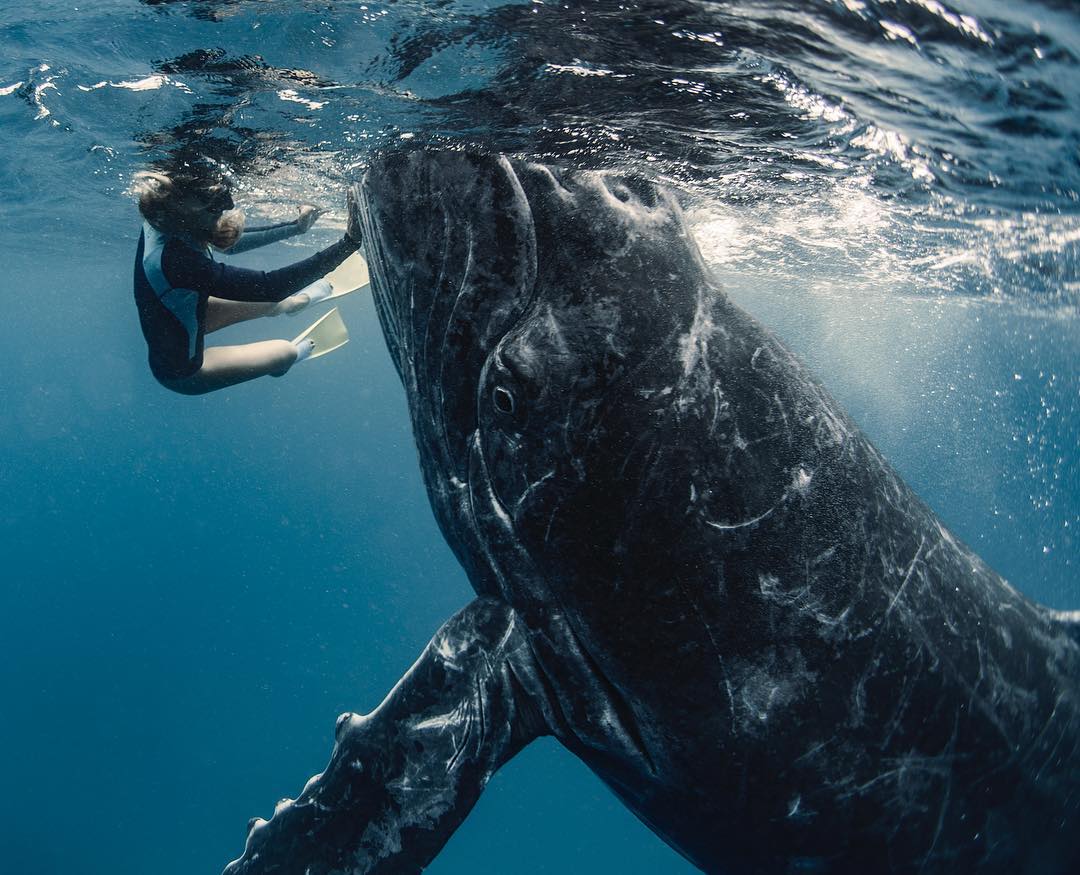
Direct interaction with whales may seem harmless, but it can disrupt their natural behavior. Image Credits: instagram.com

Scientists and several organizations have conducted multiple studies regarding the unregulated swim-with-whale operations, highlighting a range of concerns. Close human interaction can disturb natural behaviors, especially during migration, feeding, or breeding periods. Sudden approaches, engine noise, or swimmers entering the water may cause whales to dive deeper, change direction, or expend additional energy. On a larger scale, repeated disturbances could potentially impact long-term health and survival.

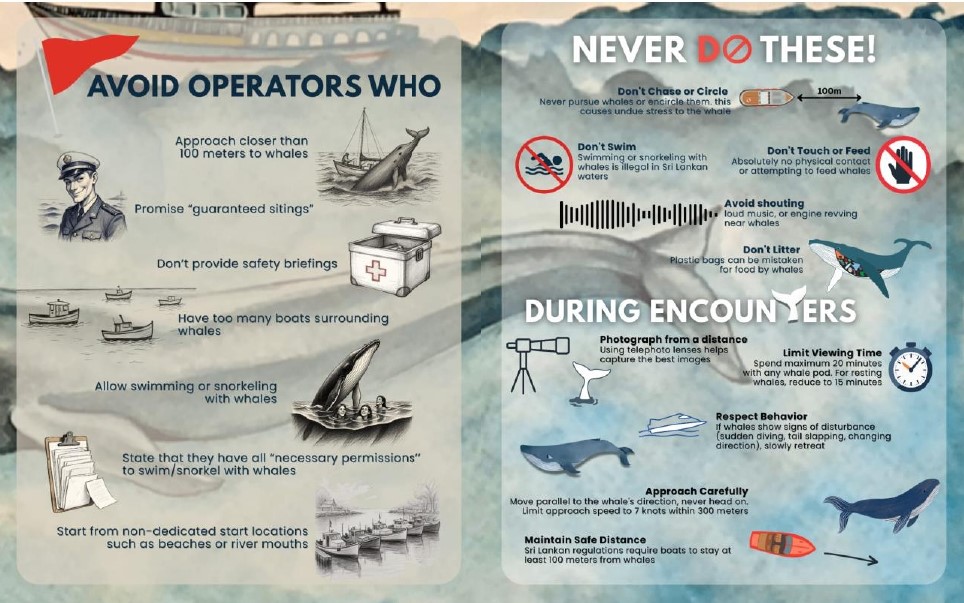
Therefore, both the tour operators and the tourists should have a responsibility regarding their actions. Tourists should be responsible of the activities they engage in and avoid operators who approach closer to the whales disregarding the distance limits, guarantee sightings, do not provide safety briefings, allow swimming or snorkeling with whales, or claim to have all necessary permissions. They should also avoid operators who start from non-dedicated locations such as beaches or river mouths. Tour operators, on the other hand, should maintain safe distances, approach whales carefully, respect their natural behaviors, limit viewing time, and avoid chasing or circling them etc.

The real problem is not whether swimming with whales is lucrative, because it clearly is. The real problem is how it is managed, whether it is done sustainably or not. If this industry is well regulated and conducted responsibly, it hastential to support coastal economies, create awareness about marine conservation, and turn whales into living treasures worth more alive than exploited. If poorly managed, however, it can stress, injure and disturb whale populations, ultimately damaging them.

In conclusione real value of this industry does not lie entirely in its financial returns. Its future depends on protecting whales and preserving the fragile ecosystems they live in. If profit and conservation can move forward together, swimming with whales can continue to inspireeople today and for many generations to come.
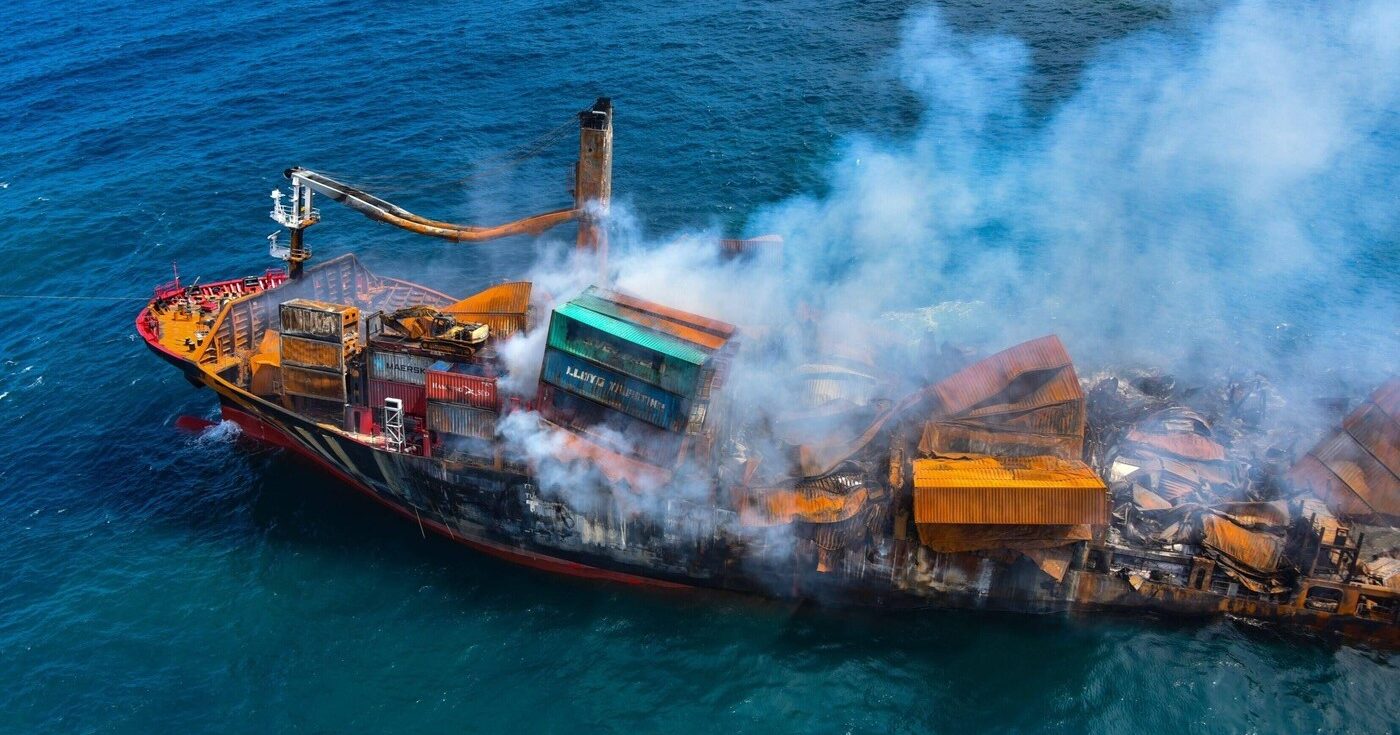
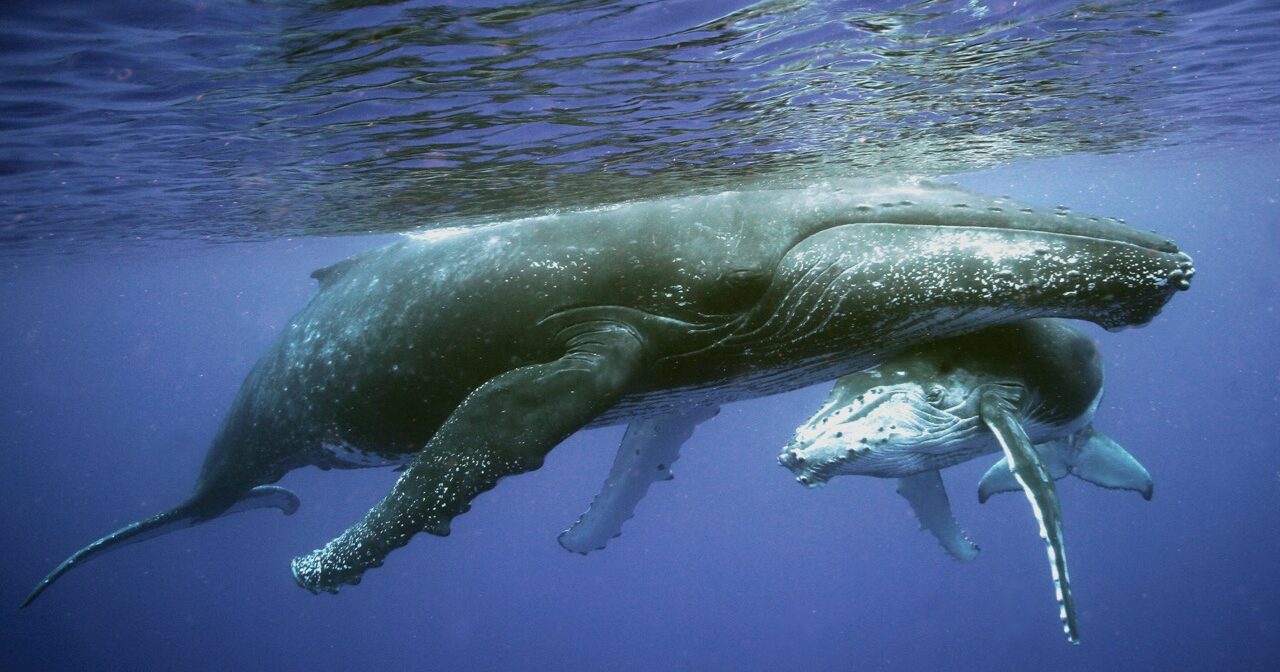
Feature Image Credits: myceylonadventures

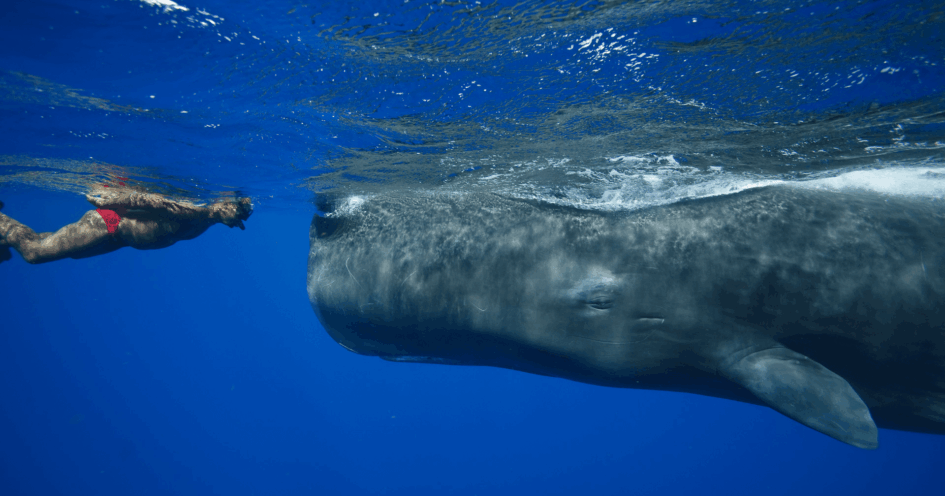
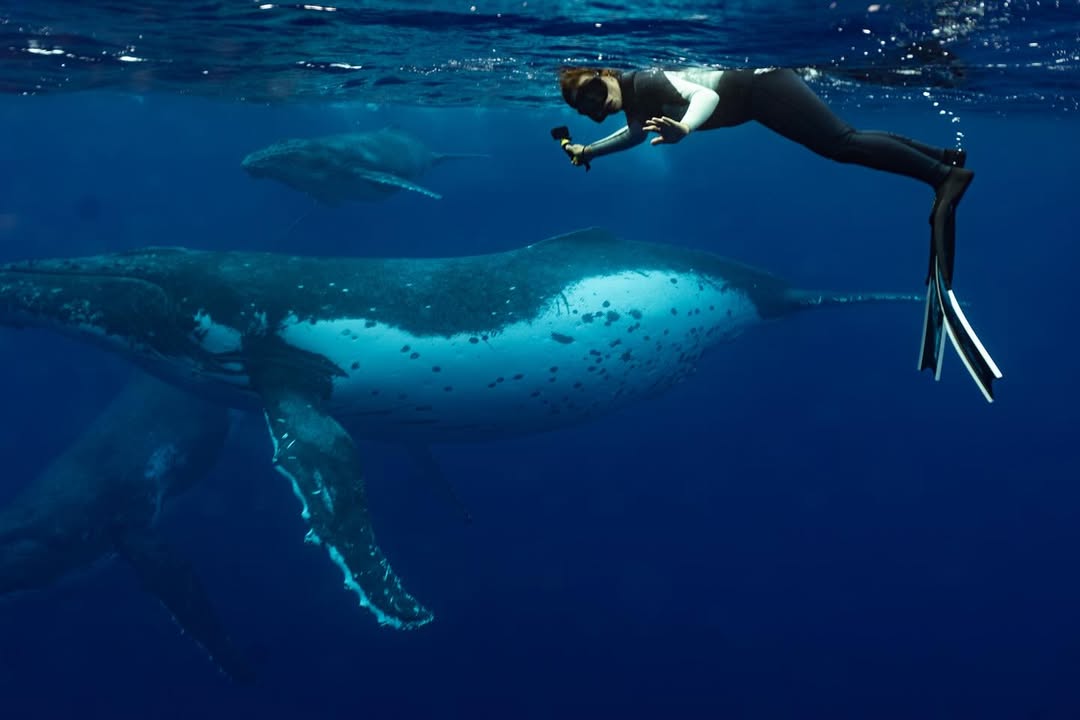
A close encounter that captures the appeal of swimming with whales, but also highlights the need for responsible interaction. Image Credits: instagram.com

Leave a Reply

The Pearl Protectors

The Nets Changing Our Seas

By: Saduni Rukshala Sri Lanka’s coastal waters are rich in biodiversity and are vital to both local communities and the fishing sector. Shallow coastal waters

Read More »
The Pearl Protectors

කැස්බෑ-මිතුරෝ: කැස්බෑවන් සහ ලංකික ජනයා අතර සම්බන්ධතාවයේ විකසනය

රෝජී ඒකනායක කණ කැස්බෑවා විය සිදුරෙන් අහස බලනවා වගේ” වැනි ජනප්‍රිය කියමන් තුළින් පවා ඇඟවෙන්නේ අතීතයේ සිට කැස්බෑවා යන සත්වයා පිළිබඳ ලංකාවාසී ජනතාවට යම් අවබෝදයක්

Read More »