By: Rukmi Peiris
A Hidden World
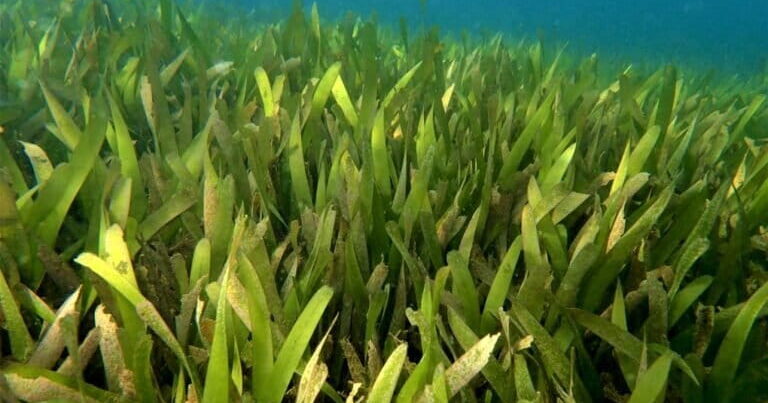
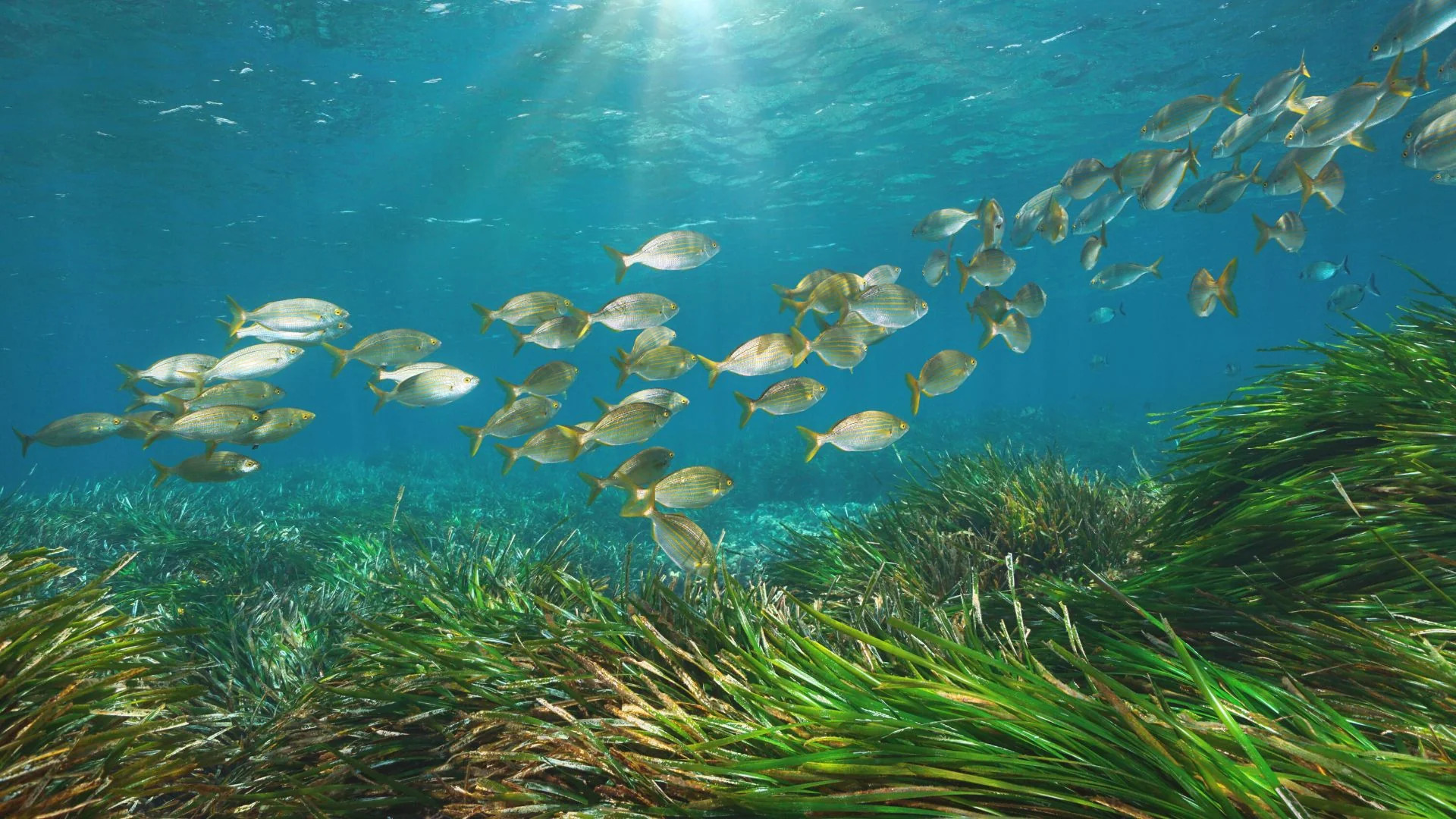
Sail just a few meters away from the coast of Sri Lanka, and the blue water below looks deep, ordinary and empty. But beneath that surface, there is something that worth our attention. It is neither full of different colors nor build of corals. It is seagrass meadows or the ‘Gardens Under the Sea’, green, gentle, swaying with the ocean currents like grass in a field dancing in the wind. And it may be one of the most important treasures in the sea that we have largely ignored.
What is Seagrass?
Seagrass is heralded as the only flowering plant capable of growing in saltwater, complete with roots, leaves, seeds, and flowers. Even though thrive beneath the waves, it functions much like the grass in our gardens. Seagrasses are also known as the “Lungs of the Sea” due to its ability to produce up to 10 liters of oxygen per square meter each day through photosynthesis.
For years, seagrass has flourished along Sri Lanka’s coastline silently. Marine species rely on it; some make it their shelter while some make it their food source. Fish hides among its leaves, turtles graze on it. Yet most of us do not properly aware about its’ existence. Now, scientists are turning their attention to these meadows and their findings are remarkably.
A Nursery for Fish
Imaging a bustling city without any buildings or homes, where all the people wander openly, expose to danger. That is what the ocean would be like without seagrass. Baby fish, prawns, crabs, even juvenile sharks need places to hide from predators. They need food while they seek cover. Seagrass fields can provide them all. When these young creatures grow, they swim out to the sea and eventually return to the nets of fishermen. Without sea grass, there would be fewer fish, fewer options for fishers, and ultimately, lower incomes. So, naturally, seagrass is not just a grass, but a nursery that helps fill our dinner plates.
The Climate Hero You Never Heard Of
We are all familiar with the concept of “Plant a tree. Save the planet.” That holds true, but seagrass does something even greater. Despite covering only about 0.2% of the ocean floor, seagrass captures carbon; the primary drive of global warming, at a rate over 30 times faster than a rainforest. Yes, a forest beneath the sea works harder than a forest on land.
Moreover, unlike trees, seagrass stores that carbon deep in the sediment, locking it away for centuries. It accounts that approximately 10% of the carbon buried in ocean sediment annually. Scientists call this trapped carbon as “Blue carbon”. Along the coastline of Sri Lanka, vast quantities of these heroes are quietly at work.
What Is Happening to the Meadows?
It is estimated that nearly 29% of the world’s seagrass has been lost since the 1880s. In Sri Lanka, the current rate of decline is estimated at 1-2% per year. For example, the seagrasses ecosystems in the northern, eastern and western parts of the Negombo Lagoon declined by an estimated 96% between 1997 and 2004.
Recent studies indicate that this downward trend is accelerating largely, due to human activities such as boats dredging for prawn farms and the disposal of urban waste into the ocean water. Some of these activities even block sunlight from reaching the sea bed, hindering photosynthesis and threatening the survival of seagrass.
The consequences are twofold. First, fish population will gradually decrease, leaving fishermen with smaller catches and low incomes. Second, all the stored blue carbon will escape back into the atmosphere, turning the former ally against climate change into a contributor to the very problem it once helped mitigate.
A New Idea : Paying to Protect
There is an idea that is not new to the world, but relatively new to Sri Lanka. It is Blue Carbon Credits. Under this model, companies pay local communities to protect seagrass meadows, offsetting the environmental damage they are cause. As a result, seagrass habitat will be preserved, carbon will be captured, companies will meet their sustainability goals and local community will receive compensation for safeguarding these vital ecosystems.
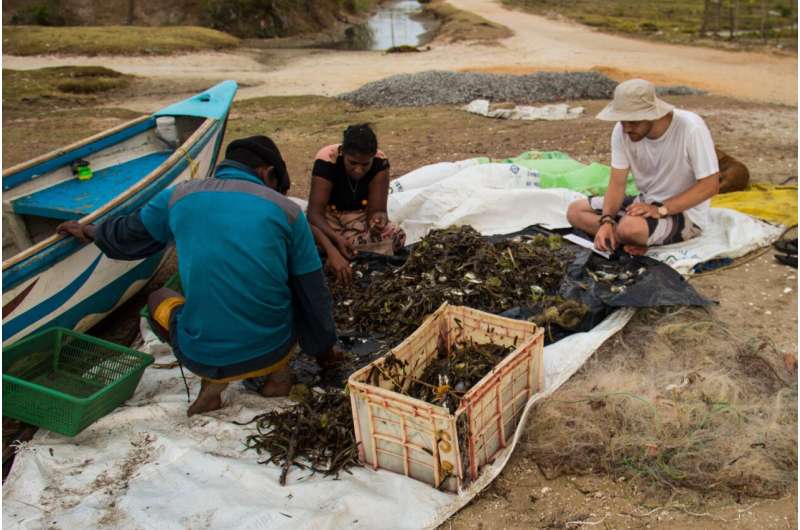
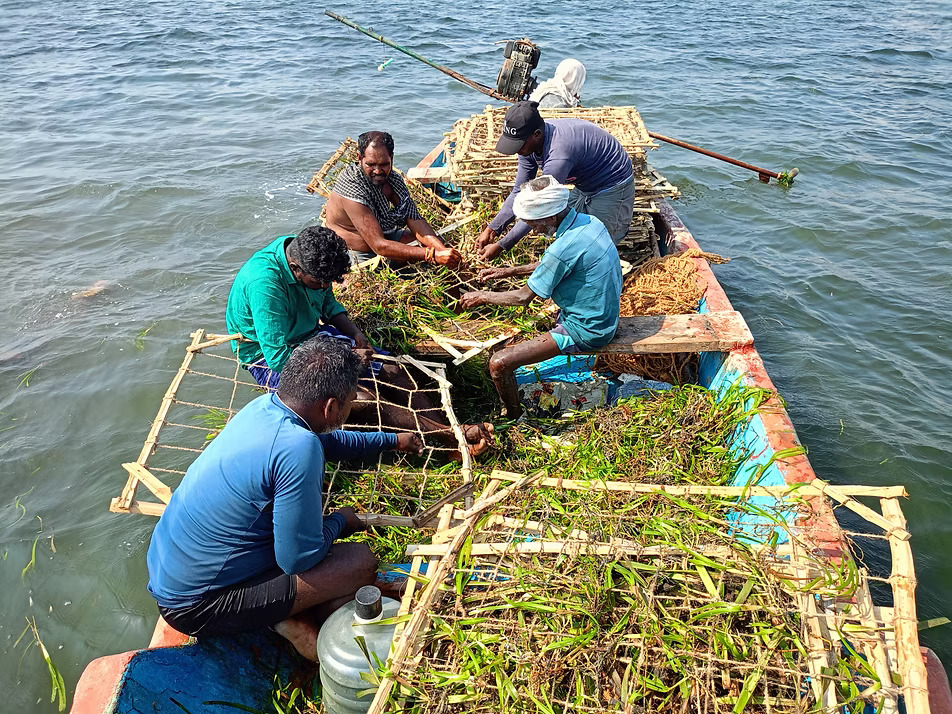
In Sri Lanka, researchers are already mapping the seagrass along the coast, counting fish and measuring carbon stocks, while engaging with fishing communities. There were previous projects, particularly focused on mangroves. However, they were put on hold due to a lack of clear authorization processes, benefit sharing agreements and regulatory frameworks surrounding carbon rights. If these challenges can be overcome, a coastal village might earn a tangible income simply by protecting the seagrass in their area, rather than destroying it.
What We Can Do?
We do not have to be a scientist to make a difference. Simply search, read and share this story. The Garden Under the Sea have been silently protecting us for so long; now it is our turn to protect them. The survival of seagrass means the survival of marine life, and along with it, the livelihood of fishermen. And our Pearl Island will breathe a little easier.
Feature Image Credits: https://news.mongabay.com/ – A healthy seagrass meadow in northern Sri Lanka.