By: Thusitha Bulathgama
Do you ever imagine farms of the future located beneath the ocean rather than on land?
Underwater gardens are becoming a new frontier explored by scientists and innovators as global food systems face the threats of climate change, land scarcity, and water constraints. These underwater farms cultivate plants such as seaweed, lettuce, and basil without the need for soil or pesticides, taking advantage of the ocean’s stable conditions. By blending sustainability and technology, underwater gardens are transforming the way we think about farming in a warming world.
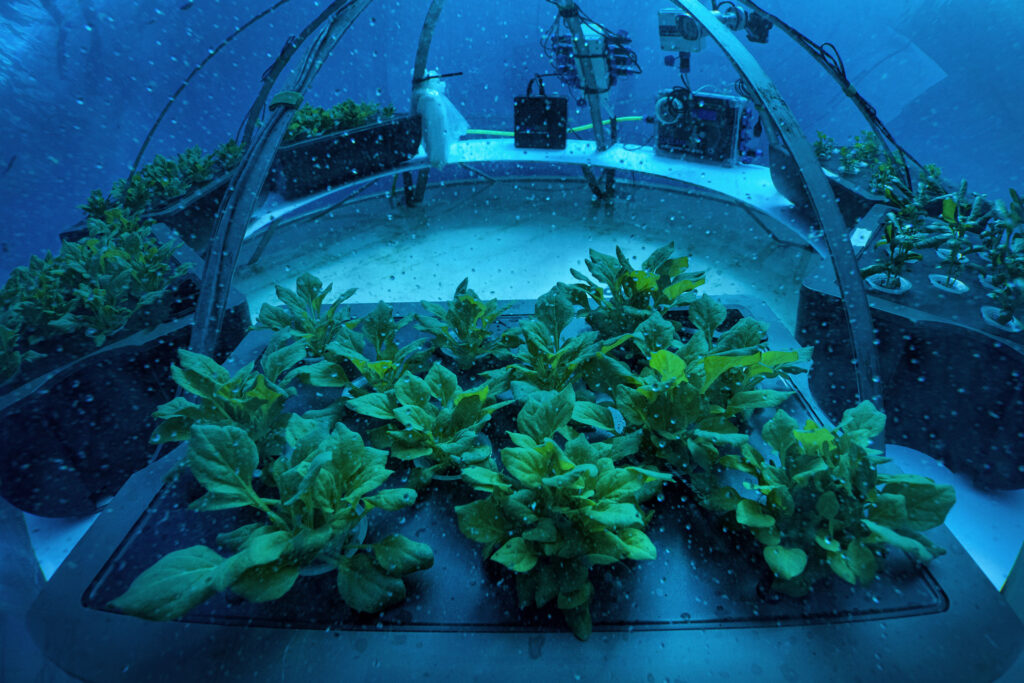
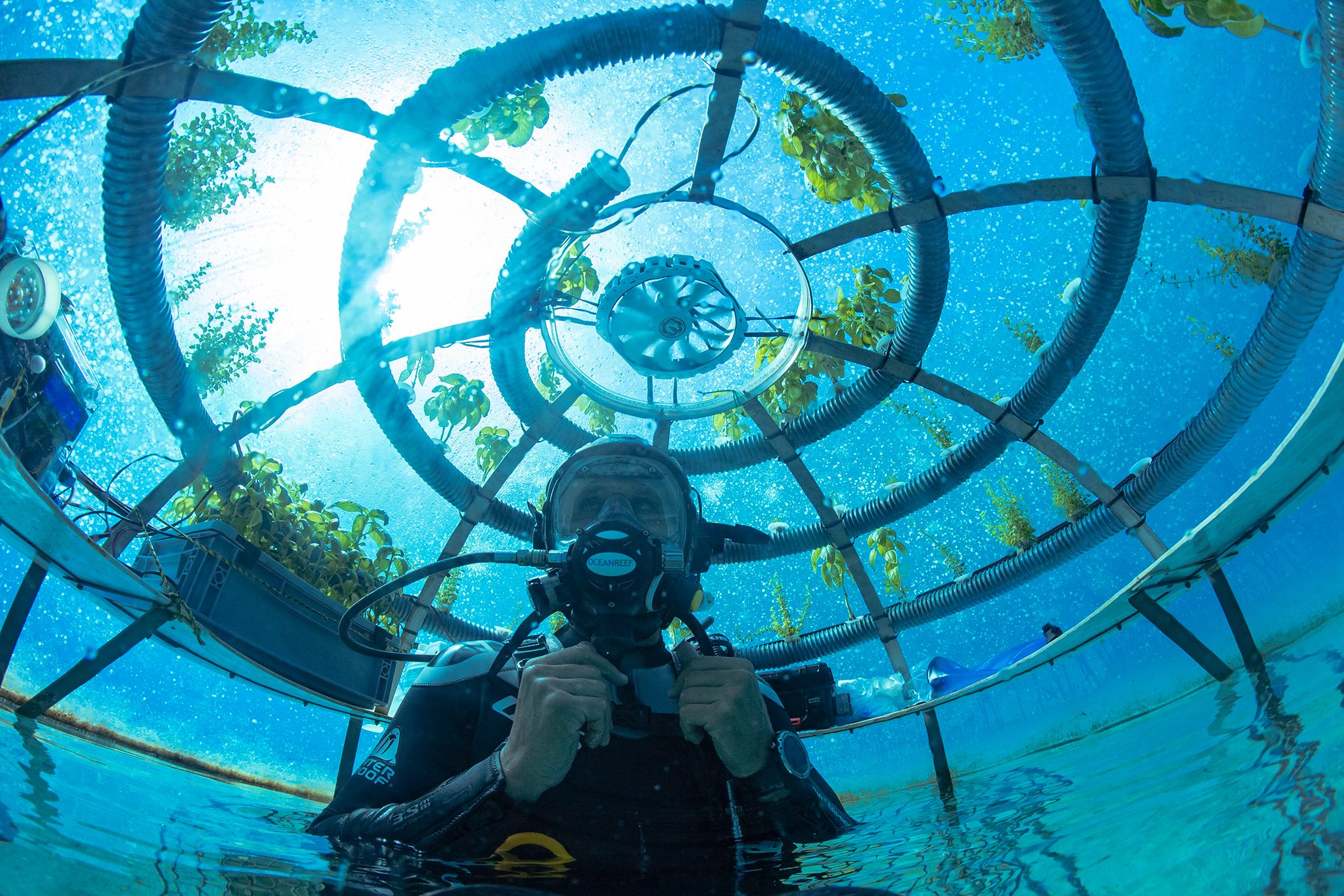
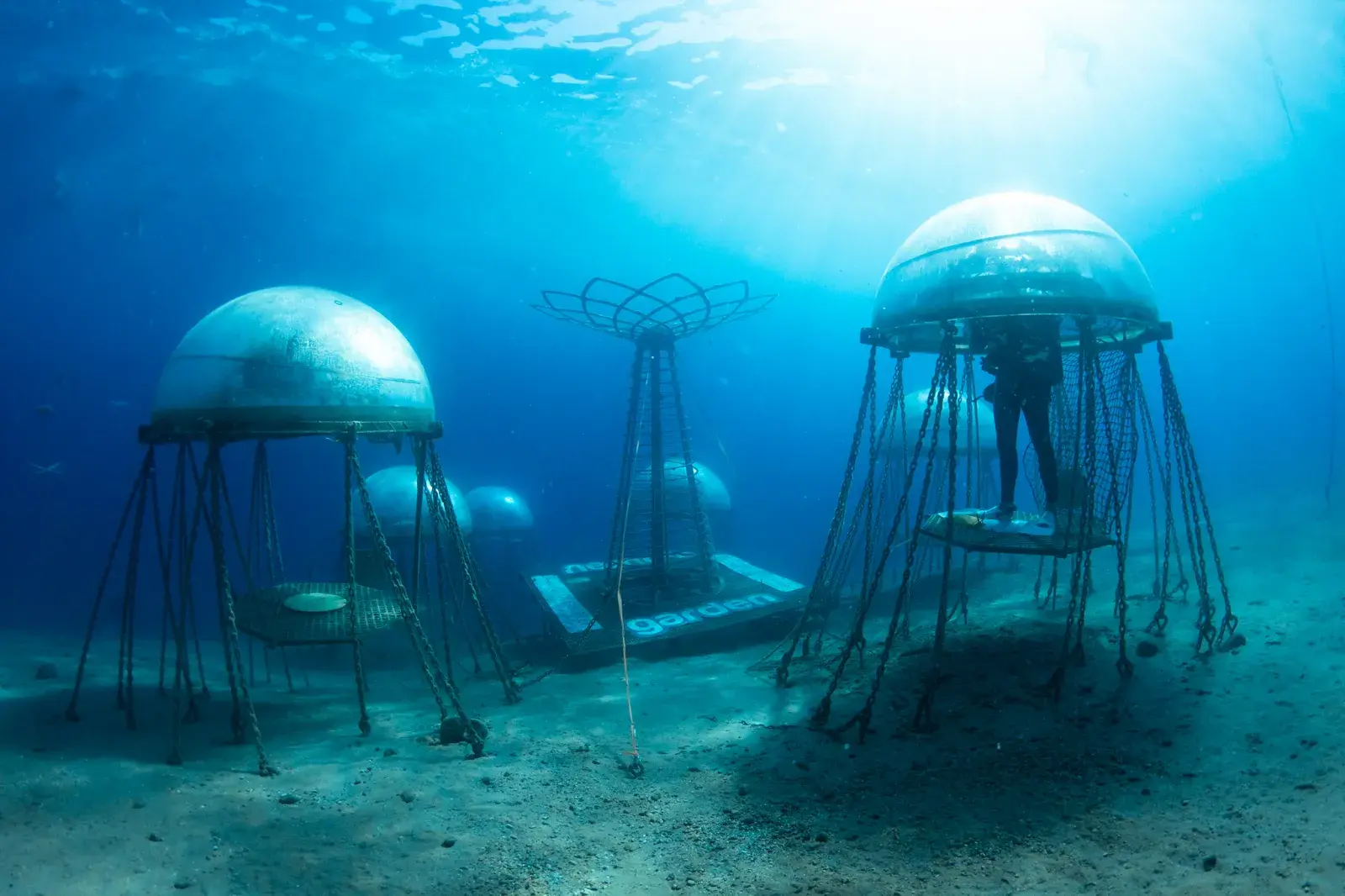
Each underwater dome contains seedbeds and a spiral tube system that pumps water and fertilizer from a lower tank to the plants. The system controls humidity, ventilation, and irrigation through a solar-powered tower above the surface. These biospheres conserve water through natural evaporation and condensation, do not require pesticides, and rely on an external water source only during the initial growth stage of the plants. A great example is Nemo’s Garden, built in 2012 by the Ocean Reef Group, off the coast of Noli, Italy. It features six air-filled plastic pods anchored 4.5 to 11 meters underwater. Equipped with sensors to monitor environmental conditions, these biospheres use hydroponic techniques to grow crops like tomatoes, lettuce, beans, and even orchids without soil-relying instead on nutrient-rich water solutions in a controlled environment.
Underwater farming offers numerous benefits for both people and the planet. It reduces pressure on land-based agriculture, helping to preserve forests and biodiversity, while promoting food security and creating new economic opportunities for coastal communities. Since no pesticides are needed, it also lessens environmental pollution and ensures safer, healthier food production. Moreover, it demonstrates the potential of sustainable, technology-driven farming methods that could redefine how we cultivate food in the future.
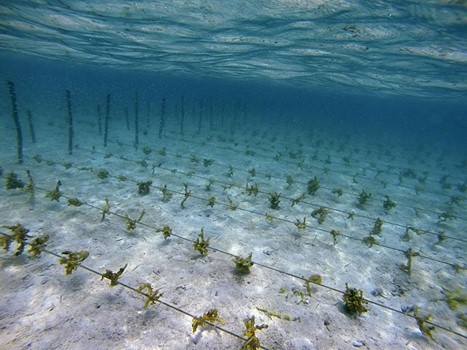
As part of its blue economy, Sri Lanka is starting to explore marine and water farming. Seaweed cultivation in Jaffna and along the Southwest coast supports local food production and provides sustainable livelihoods. Projects like Colombo Port City’s artificial reefs and coral nurseries highlight how the nation is combining innovation and conservation. Expanding such underwater farming methods could enhance food security, generate employment opportunities in coastal areas, and foster eco-friendly agricultural practices.
Despite the promising opportunities and potential advantages, underwater farming still faces challenges that must be addressed before it can be widely adopted. Infrastructure, equipment, and regulatory frameworks need further development to ensure long-term sustainability and safety. However, with continued innovation, the next green revolution might just begin beneath the waves.
Photo Credits: CNN Media, News Week, Nemo’s Garden, Living Oceans Foundation