
By: Sehanthi Samarakoon

Due to its tendency to arrive around Christmas time, El Niño has been named  “The Little Boy” or the Christ child in Spanish which contrasts with its actual impact on global weather patterns and ecosystems with disastrous effects on humanity.
The hot topic related to climate change these days has easily become  El Niño and how it affects everyone. Especially with the recent disaster of the Himalayan flash floods, people have finally started questioning themselves about the ever so real and prominent consequences of climate change and how global warming as a force multiplier could negatively affect a natural cycle like El Niño.

So what is  El Niño

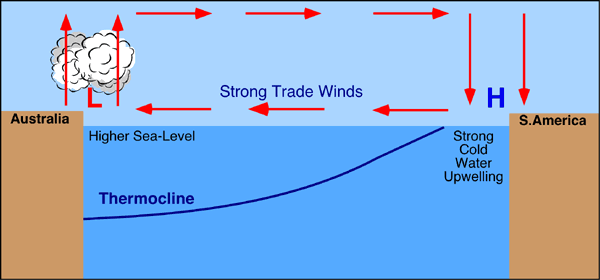
El Niño is a phenomenon that typically occurs above and in the vicinity of the Pacific Ocean. In its true form El Niño has been known to cause changes to atmospheric patterns. During a typical El Niño event as shown by the figure, the warmed up air masses create a broad area of low pressure. Since this area is located in the middle of the Pacific Ocean it leads to weakened trade winds. The lack of strong trade winds relates to the lack of warm water being pushed westward. This results in warm surface waters sliding east causing strom systems to move with it. This means that the west coasts of both North and South America get an insurgence of species who greatly prefer the warm waters while cold water species move north or into deeper water thereby restricting their range.

Image: This cross-section of the Pacific Ocean, along the equator, illustrates the pattern of atmospheric circulation typically found at the equatorial Pacific. Credit: http://www.physicalgeography.net/

The effect of El Niño such as with the wind reversal leads to a similar effect on the Indian Ocean as to an exaggerated southwest monsoon unlike the impact of the phenomenon over the Pacific Ocean.  El Niño frequently triggers a positive Indian Ocean Dipole phase which is a separate ocean-atmosphere climate pattern in the Indian Ocean that frequently interacts with the El Niño-Southern Oscillation (ENSO) in the Pacific. This phase warms the Western Indian Ocean while cooling the eastern basin near Indonesia. However, the equatorial band and the south-tropical Indian Ocean are much more directly influenced by ENSO events in the Pacific.

In terms of Sri Lanka sitting towards the north of the equator, the ENSO oscillations have been felt through  the weakening of the southwest monsoons. It is important to identify and differentiate between the impact of El Niño on society as opposed to the environment. Note that its effects vary by region and season, and not every El Niño produces the same outcome. When the seasonal monsoon is weakened there leads to drought conditions to erupt across the western and central agricultural zones. Higher temperatures can be experienced combined  with accelerated soil moisture loss. A strong El Niño however produces a whiplash effect where the first half is all encompassed of a dry spell and the second half is respondent with floods and landslides in mass amounts. As a major climate pattern that shifts global weather systems, El Niño also triggers extreme natural disasters like severe droughts and catastrophic floods which is equally disastrous for the wildlife in terms of habitat destruction and sedimentation and changes to water chemistry though the occurrence of floods in coastal zones fresh with freshwater.

Due to global warming the ocean surfaces are already warmed up which means that when El Niño occurs, it warms oceans that have already been heated up, since for every 1 Celsius increase in global temperatures the air holds 7% more moisture according to NASA Science.

As we understand, the El Niño phenomenon is subsequently worsened as a result of the worsened impacts of climate change and leads up to the build up of natural disasters leaving fatal impacts even on the marine sphere as well as civil society. As an island nation, Sri Lanka is extra vulnerable to changes happening in the global climate and the worsening effects of El Niño certainly doesn’t help.

What does it mean for marine life?

With 2027 predicted to be the hottest year on record (Met Office), it is likely that marine life around the world is to take a hit from it. Changes seen in warm waters threaten microscopic phytoplankton which form the base of the marine food web. This sends ripple effects  through the food chains into reducing species population. Smaller fish that depend on the plankton move to cooler zones causing larger pelagic fish like tuna to become scarce in Sri Lankan waters since their main food source has depleted. The lack of a food source along with the prevalence of massive sea surface temperature anomalies across thousands of miles of ocean leads to highly mobile species like mahi-mahi, squid and tuna to migrate in search of cooler waters disrupting regional fisheries in the process.

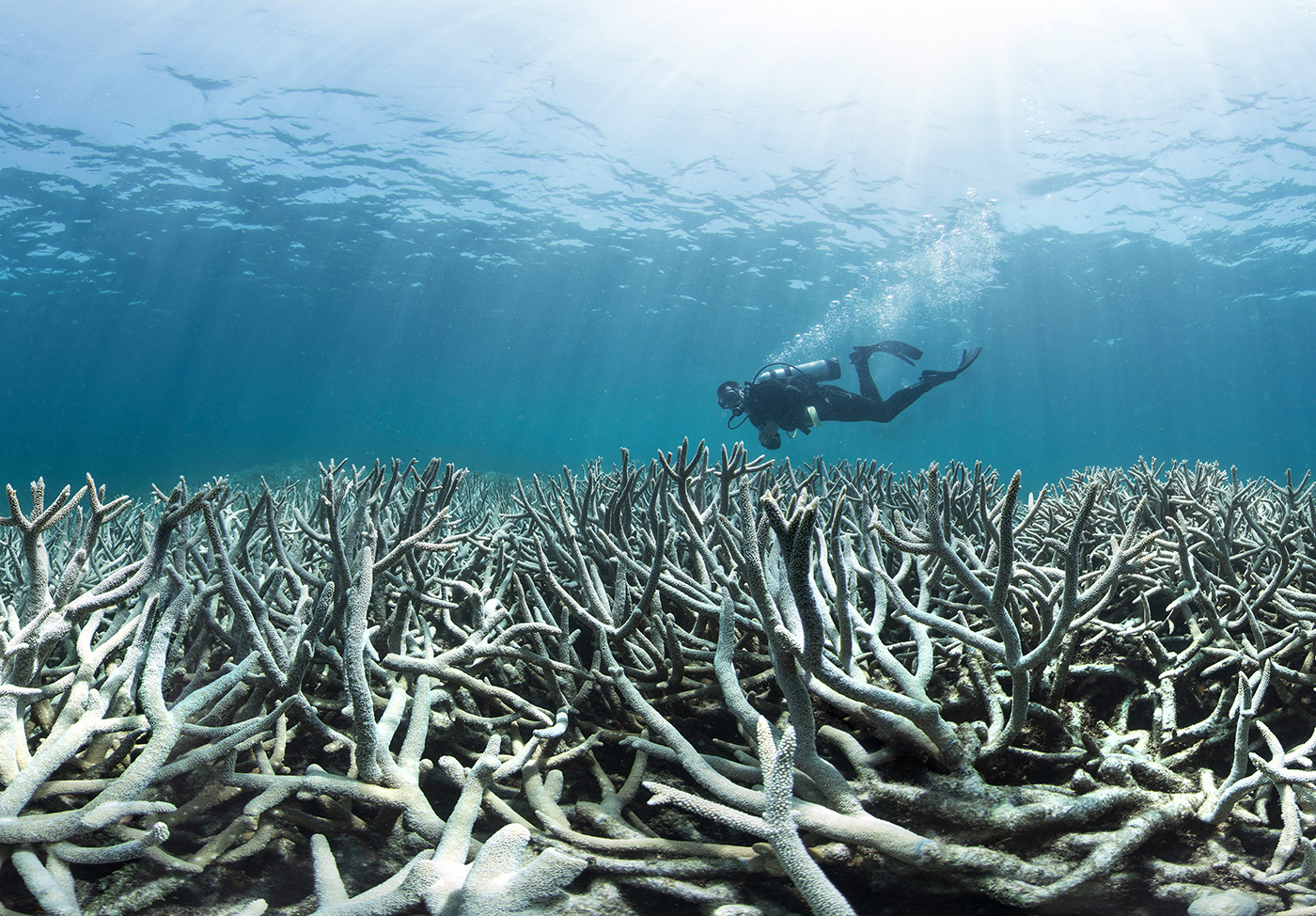
Image: A diver checks out the coral bleaching at Heron Island in February 2016. Credit: https://www.carbonbrief.org/

Rising global temperatures has also led to 3-4°C increase in heatwaves in tropical countries at present day, causing significant coral death since 1998. This poses a major risk to marine biodiversity, as coral reefs are the most biodiverse marine ecosystem that provides habitat, food and shelter for roughly a quarter of all marine life.

Is a super El Niño under way?

In a recent press release the World Meteorological Organisation confirmed that the forecast shows that there is 100% likelihood that the current conditions caused as a result of the ENSO oscillations to persist through February 2027. And the central Pacific Ocean’s surface temperatures have predicted anomalies that reach 3 celsius to 4 celsius above the long term average leading up to the presumption that super El Niño is underway. Taking all this into account, it is safe to assume that there will be expected disruptions along global weather systems from severe droughts and violent tropical storms.   It is concerning when these disasters occur in areas that comparatively have low contribution to global warming as opposed to the more developed countries of the West that produce a higher carbon footprint and higher emissions.This disparity is duly recognised to be the climate injustice paradox. In recent years, the West led by Germany has taken proactive steps into reducing their carbon footprint while India and China appear to take up the places on the global emissions charts.

Sri Lanka as a third world country which has more to lose if a super El Niño were to happen should focus more on building disaster shelters for proper disaster management in the long term.
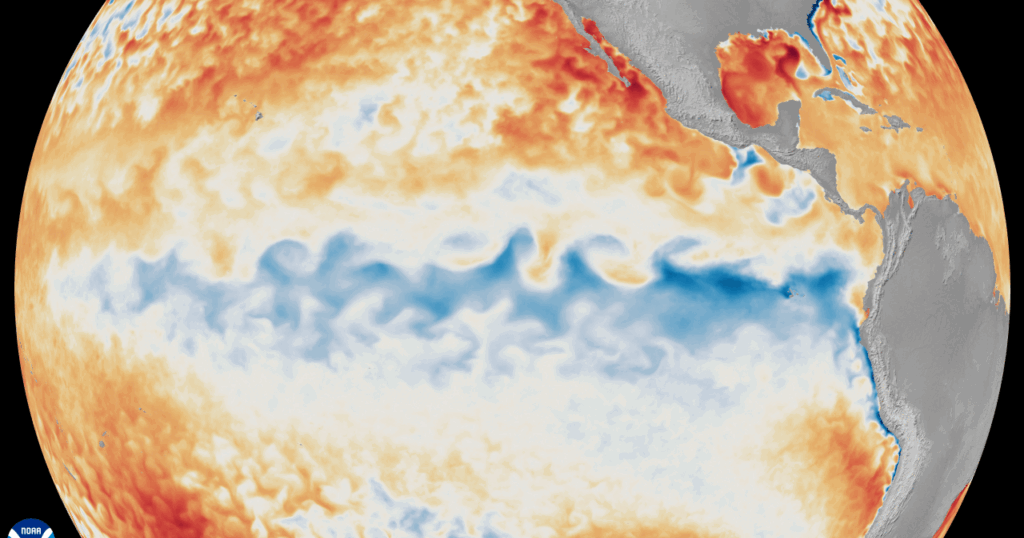
Feature Image: A NOAA animation shows the change in sea surface temperature departures from average in the tropical Pacific Ocean during the first week of January 2026. Credit: NOAA Satellites

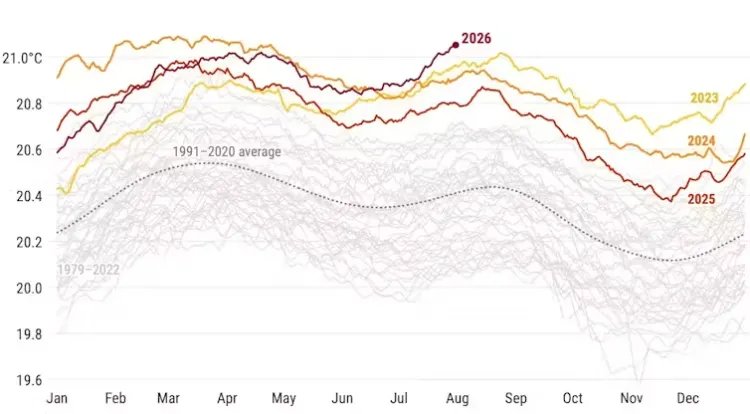
Image : Daily sea-surface temperatures across the world’s oceans between 60°N and 60°S. The four warmest years are highlighted, including 2026 to date. Credit: https://www.1news.co.nz/

Leave a Reply

The Pearl Protectors

Doomsday El Niño

By: Sehanthi Samarakoon Due to its tendency to arrive around Christmas time, El Niño has been named  “The Little Boy” or the Christ child in

Read More »
The Pearl Protectors

Renewable Ocean Energy

By: Sajini Perera Renewable ocean energy is derived from natural ocean movements, temperature differences, and other physical properties of the ocean. Unlike fossil fuels, these
Read More »
The Pearl Protectors

இலங்கையின் கனிம மணல் அகழ்வு: பொருளாதார வாய்ப்பா அல்லது சூழலியல் அபாயமா?

எழுத்தாக்கம்: அப்துல் பாஸித் பஷீர் நாம் பெரும்பாலும் இலங்கையின் கடற்கரைகளை அழகிய மணற்பரப்பாகவும், சுற்றுலா துறையின் அடையாளமாகவும் மட்டுமே பார்க்கிறோம். அவற்றிற்கு அப்பால், பில்லியன் டொலர் மதிப்புள்ள முக்கிய கனிம வளங்களை அது தன்னுள்

Read More »