The journey of sea turtles along Sri Lanka’s shores

By : Aamina Gaffoor

Along the golden coastlines of Sri Lanka, a quiet yet extraordinary journey unfolds beneath the moonlight. Each year, sea turtles return to the very beaches where they were born, guided by instinct. After travelling thousands of kilometres across vast oceans, they arrive at these familiar shores to begin another cycle of life. However, this remarkable natural phenomenon is increasingly under threat in today’s rapidly changing world.

Sri Lanka is home to five of the world’s seven species of sea turtles: the Green Turtle, Hawksbill Turtle, Loggerhead Turtle, Olive Ridley, and the majestic Leatherback. These ancient mariners have existed for millions of years, surviving immense environmental changes. Yet today, they face challenges unlike ever before. Their long migratory journeys across the Indian Ocean are fraught with danger, but their instinct to return to Sri Lanka’s shores remains unwavering. Beaches such as Kosgoda and Rekawa have become vital nesting grounds, where turtles come ashore under the cover of darkness to lay their eggs.

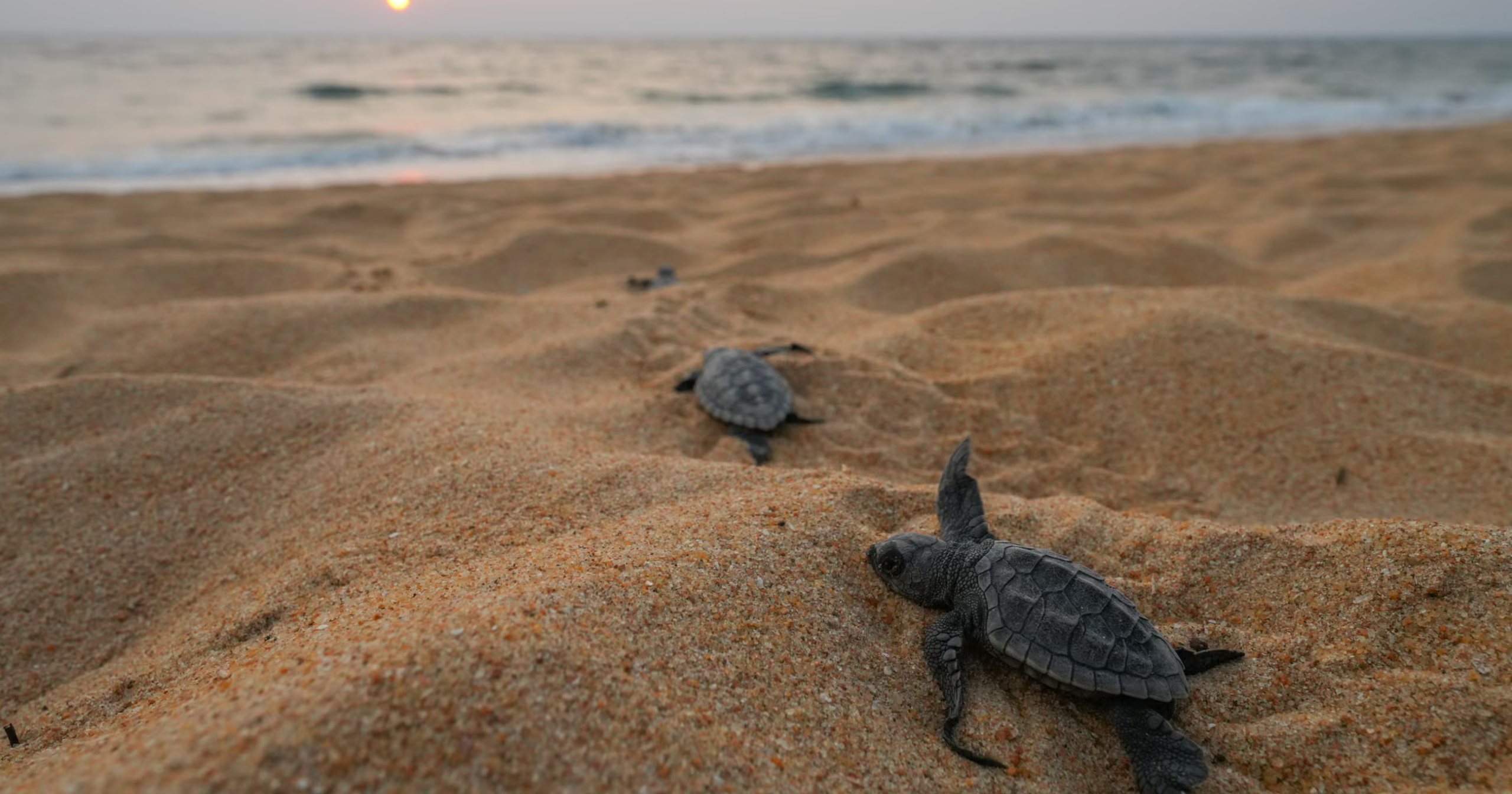
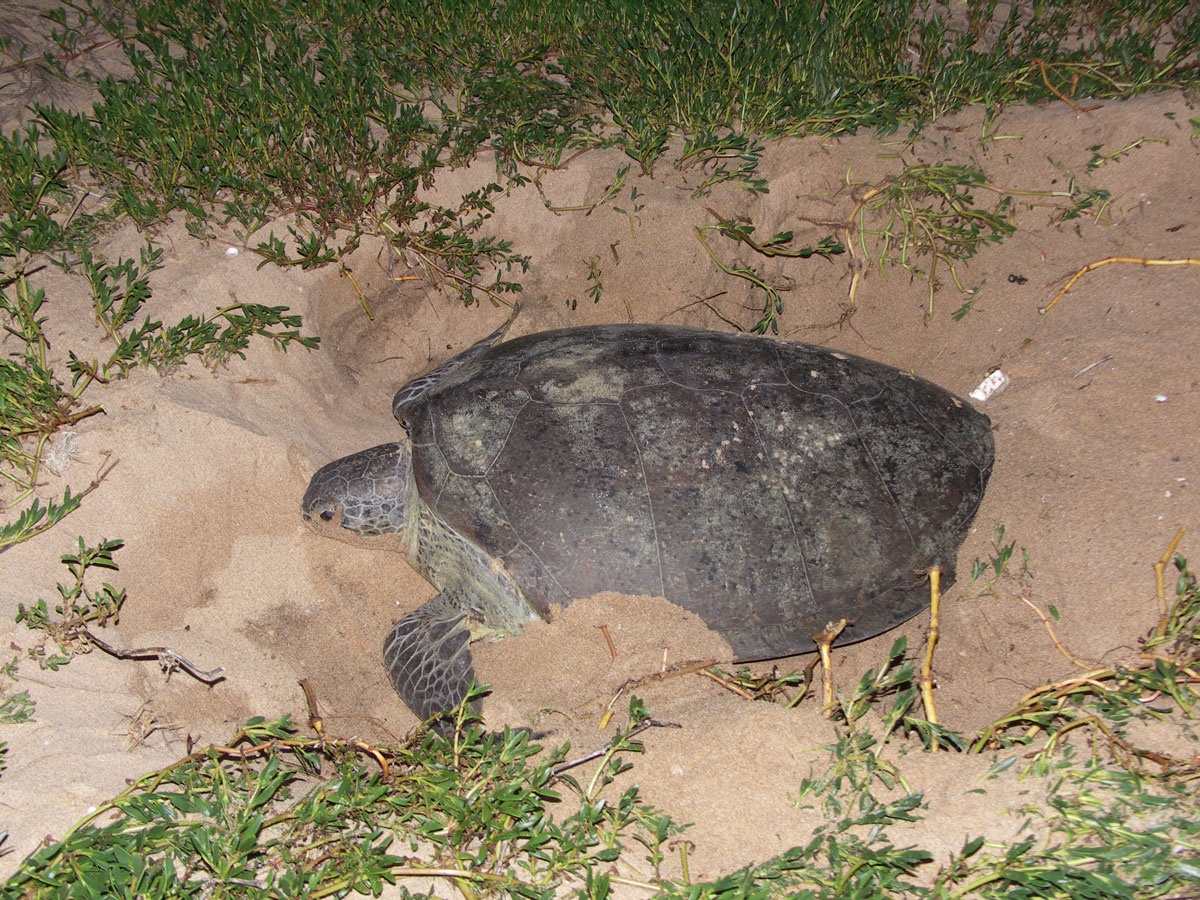
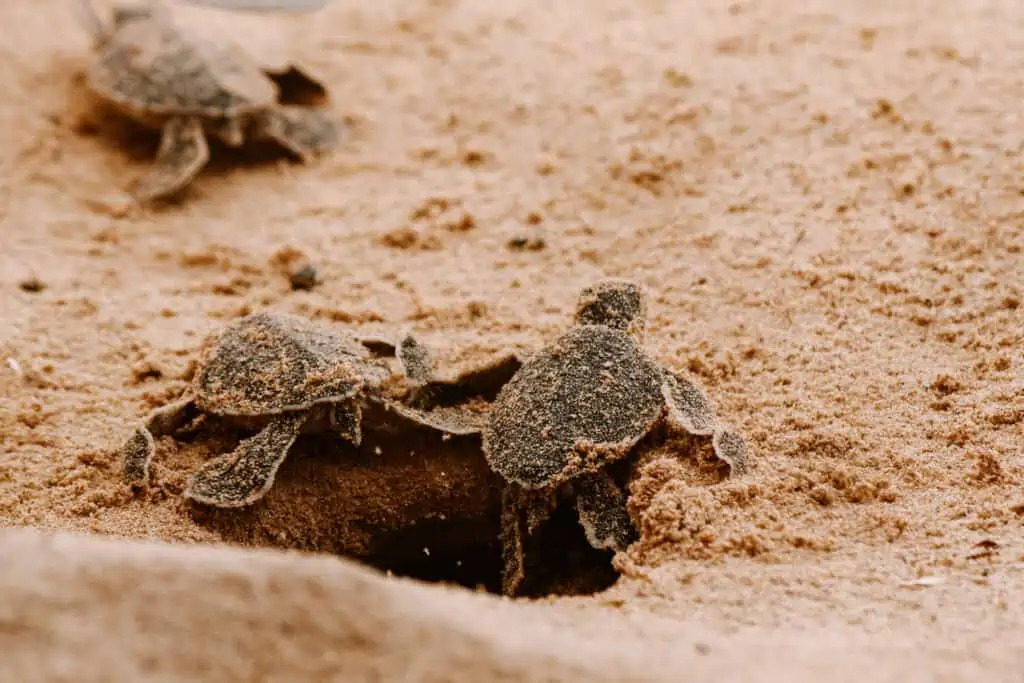
The nesting process itself is both delicate and fascinating. Female turtles carefully select suitable sites, digging deep nests in the sand where they lay around 100 eggs at a time. Once completed, they gently cover the nest, concealing it from potential predators before slowly returning to the ocean. Weeks later, the beach comes alive as tiny hatchlings emerge from beneath the sand. Guided by the natural glow of the horizon, they instinctively move towards the sea. Yet this journey is perilous, and only a small fraction survives, facing predators, exhaustion, and environmental obstacles from the moment they are born.

Image Credits : nfrsrilanka,org

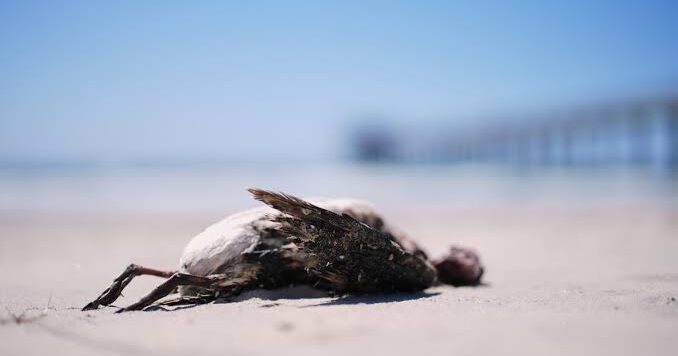
Today, these remarkable creatures are increasingly at risk due to human activity. Coastal development has reduced the availability of safe nesting sites, destroying and disrupting natural habitats. Meanwhile, ocean pollution, particularly plastic waste, poses a silent but deadly threat. Turtles often mistake plastic bags for jellyfish, one of their primary food sources. When ingested, plastic can cause severe internal blockages and toxic poisoning, which are often fatal. In some areas, eggs continue to be illegally poached, further threatening future populations.

Artificial lighting along beaches presents another critical challenge. Hatchlings rely on the natural light of the horizon to guide them to the sea. However, lights from hotels, streets, and buildings disorient them, leading them inland instead. This confusion makes them more vulnerable to dehydration, predation, and death. What may seem like a minor human convenience can have devastating consequences for these fragile creatures.

Climate change further intensifies these threats. Rising global temperatures affect the sand in which eggs incubate, and this temperature determines the sex of hatchlings. Warmer sand produces more females, potentially creating long-term population imbalances. In addition, rising sea levels and increasingly intense coastal storms wash away nests before eggs can hatch, reducing the number of turtles that successfully reach the ocean each year.

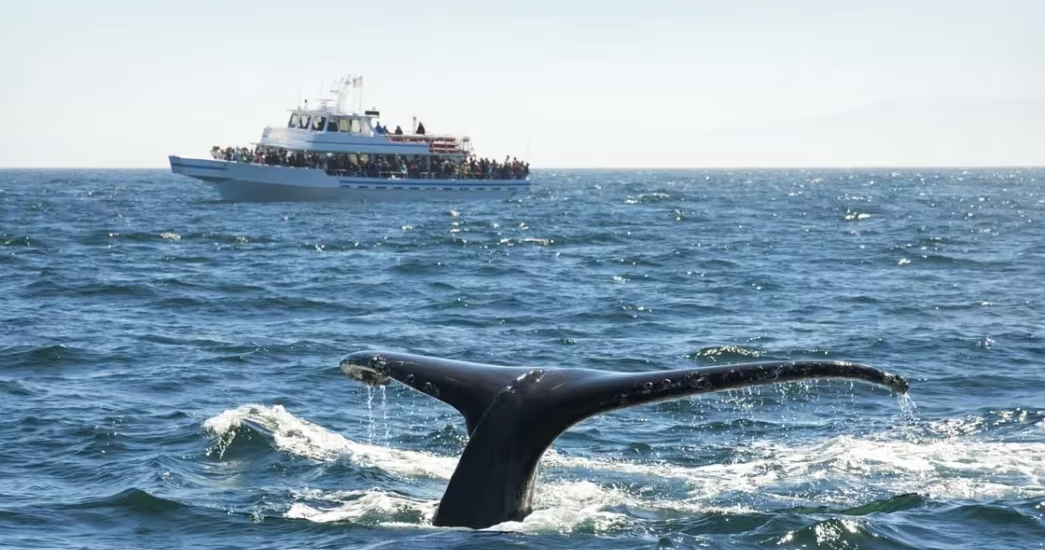
Image Credits : travellersisle.com

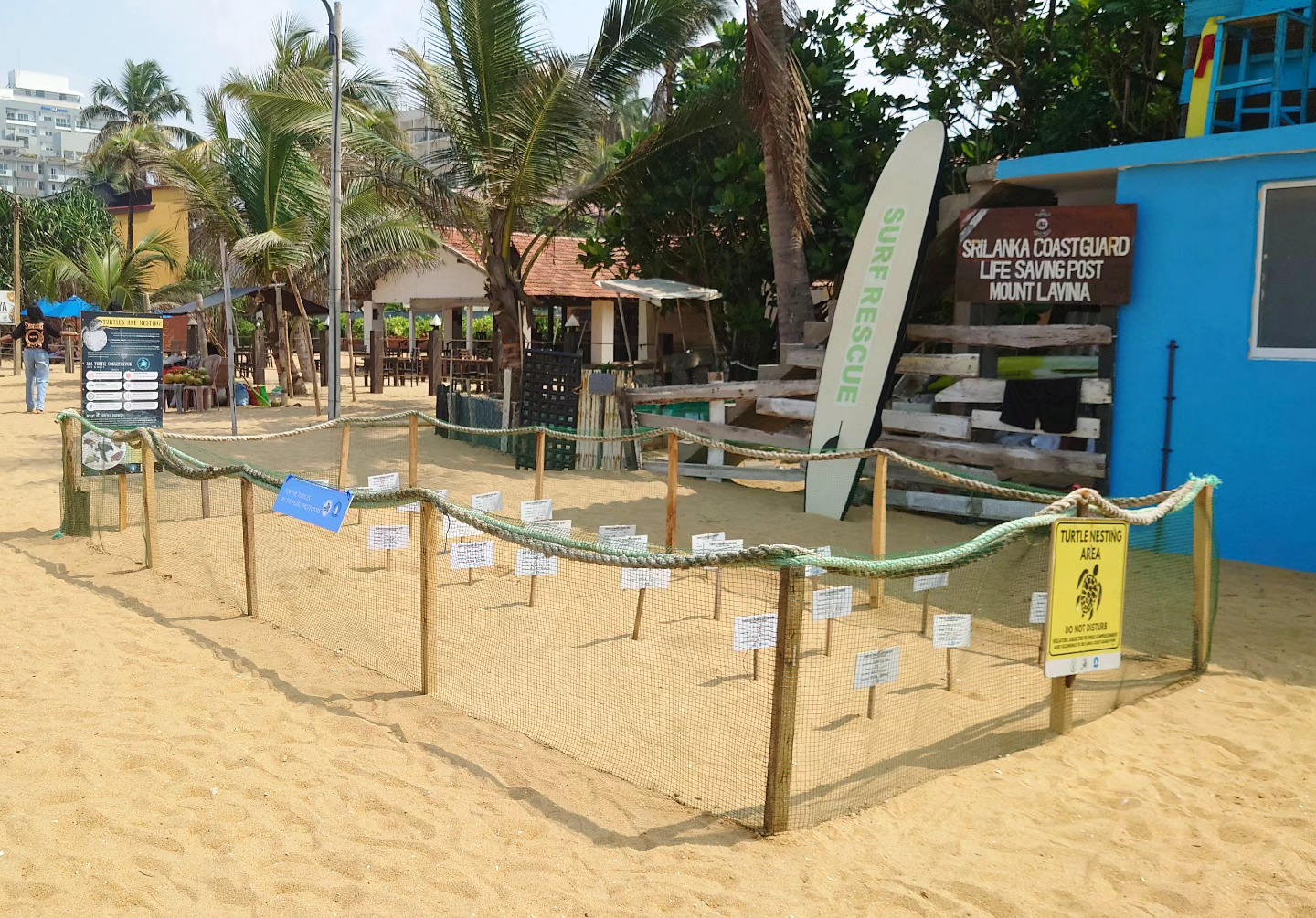
Despite these challenges, there is hope. Conservation efforts across Sri Lanka are making a meaningful impact. Turtle hatcheries have been established to protect eggs from predators and human interference, increasing the chances of survival for hatchlings. Community-led initiatives are also playing a vital role. Many coastal communities that once relied on turtle eggs for income are now actively engaged in conservation, helping to protect nesting sites and raising awareness about the importance of these species.

The journey of sea turtles along Sri Lanka’s shores is a powerful reminder of nature’s resilience. It also highlights the delicate balance between human activity and the natural world. Protecting these creatures is not merely about saving a single species; it is about preserving the health of our oceans and safeguarding biodiversity for future generations.

Each of us has a role to play. Simple actions, such as reducing plastic use, supporting conservation efforts, and spreading awareness, can collectively make a significant difference. The survival of sea turtles depends not only on large-scale initiatives but also on the everyday choices we make. If we fail to protect these extraordinary creatures today, their ancient journeys may one day come to an end. However, with collective effort, we can ensure that future generations continue to witness this remarkable cycle of life.
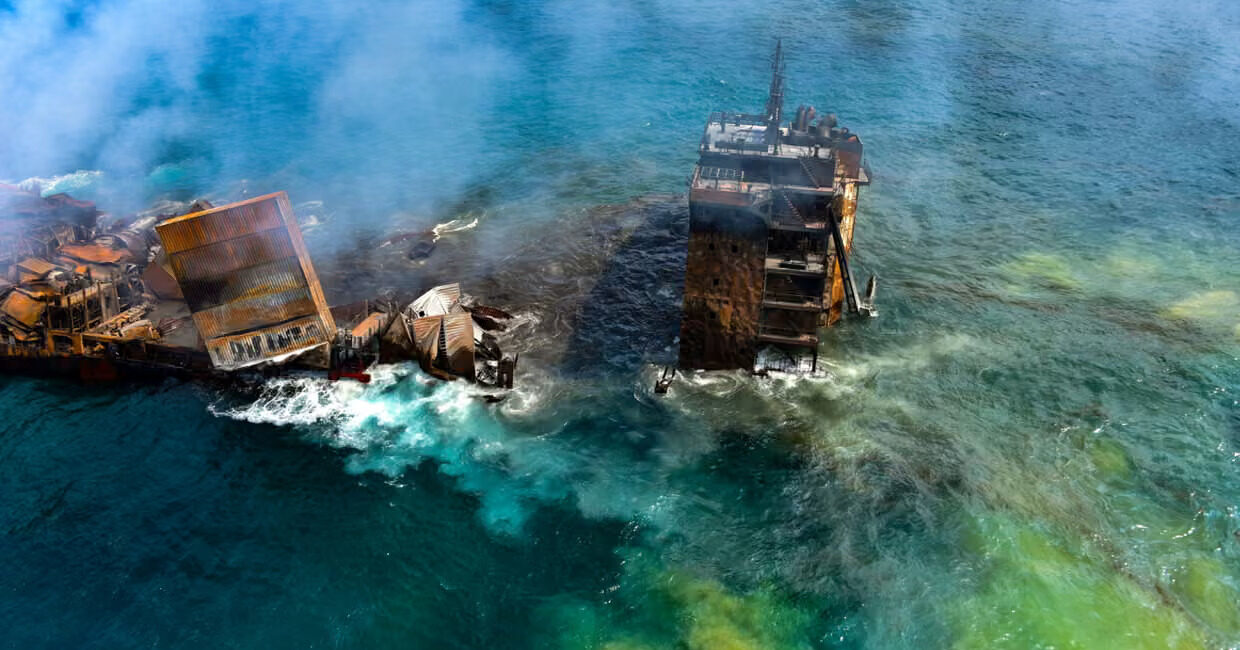
Feature Image Credits : theguardian.com

Image Credits : pearlprotectors.org

Leave a Reply