By: Dilshani Maralanda
Do you know that a single underwater explosion can destroy what nature took centuries to build?
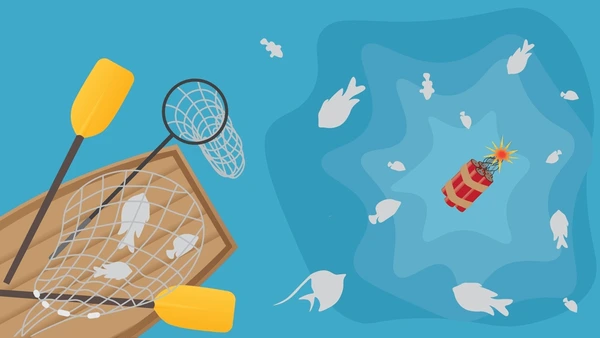
Dynamite fishing is an illegal fishing practice used by fishermen to catch a large yield at once. They use dynamite to make explosions underwater. The immediate shockwaves generated by the explosions kill not only the targeted species but also all other organisms living around the explosion.
So even if it provides fishermen a considerable amount of harvest, it leaves behind a silent underwater wasteland. Over time, it will result in reducing fish stocks, reducing tourism potential, and overall threatening the livelihoods of coastal communities.
Dynamite fishing has been reported in many regions all over the world, including East Africa, parts of South Asia, the Indian Ocean, and also in Sri Lanka, where it continues to threaten marine biodiversity and coastal livelihoods. This article discusses the impacts of dynamite fishing on marine ecosystems and examines its causes, ecological and socioeconomical consequences, legal challenges, and the urgent need for conservation measures. Understanding the depth of its damage is crucial if we want to protect marine life and to safeguard the future of the coastal communities that depend on the ocean.
What is Dynamite Fishing?
Dynamite fishing is an illegal fishing practice that uses explosives to kill or stun fish. A dynamite includes a dynamite paste, a cap, and a cord. The cord is used to light the explosive. Mostly, the explosives are obtained easily from the mining and building industries. When a stick of dynamite blasts underwater, it makes a powerful shockwave. The shockwave kills the nearby fish and causes them to float to the surface. Then the fisherman easily collects the fish from the surface.
Fishermen often tend to use this illegal practice because it gives a quick and high volume of catch with a minimum effort. Poverty, lack of awareness, and weak law enforcement are the key driving factors of this illegal fishing practice. This is a prohibited practice under national fisheries laws and other international laws. However, people in remote coastal areas still utilise this illegal practice due to limited monitoring and poor enforcement, causing severe threats to marine ecosystems and sustainable fisheries.
The Environmental Impact
Dynamite fishing causes huge damage to marine ecosystems. The powerful explosions break down the coral reefs into fragments. And they may take decades to recover. Reef structures provide habitats and breeding grounds for many organisms. As reef structure collapses, countless marine species lose their habitats and breeding grounds.
The explosions kill not only the targeted species. It blindly kills all the other organisms within the area, including small fish, larvae, corals, crustaceans, and plankton etc. So, it disrupts the entire marine food web, upsetting the predator-prey relationships. Finally, it affects the balance of the entire ecosystem. The resulting sedimentation and debris from the continuous blasting deposits on marine plants and benthic organisms, leading to long-term habitat degradation.
The Socioeconomic Impact
Dynamite fishing gives short-term financial benefits, but in time it will lead to long-term depletion of fish stocks, which will threaten the future of coastal communities. The destruction of coral reefs and other marine ecosystems reduces the scenic beauty and the attraction of tourists, directly reducing income from tourism activities such as diving, snorkeling, whale watching, and other recreational activities. Overexploitation will also lead to depletion of resources, resulting in unemployment and conflicts among coastal communities.
Legal and Enforcement Challenges
There are various environmental regulation acts, including the Fisheries and Aquatic Resources Act, which prohibits dynamite fishing. However, even though these rules and regulations exist, their enforcement remains weak. Several factors hinder effective law enforcement, including political interference, corruption, limited resources, and a lack of awareness among coastal communities. In addition, monitoring large and remote coastal areas throughout the day with limited technology and manpower is a difficult task, allowing illegal fishing practices to continue undetected.
Conservation and Mitigation Strategies
Stronger law enforcement is key, especially since monitoring vast coastal areas is challenging. More frequent patrols, supported by modern tools like drones, radar, and satellite tracking, can help detect illegal activities more effectively. At the same time, building a sense of responsibility among fishers is equally important. Educating them about the long-term damage dynamite fishing causes to both marine life and their own livelihoods can encourage a shift toward sustainable methods.
Since poverty often drives people to these harmful practices, offering alternative livelihoods such as aquaculture or eco-tourism can reduce dependence on destructive fishing. Finally, restoring damaged ecosystems through coral reef rehabilitation, artificial reef building, and creating Marine Protected Areas is crucial. Involving local communities in these efforts not only boosts success but also strengthens their connection and commitment to protecting the ocean.
Tying it all together
Dynamite fishing causes significant impacts on the environment and society. It destroys coral reefs, reduces fish populations, disturbs marine food webs, and takes away the fishing communities from sustainable fishing practices. A collective effort is needed to address this issue. Effective law enforcement by the Government is a must. The collaboration between the Government, NGOs, and international organisations is important. And also, local communities have a huge responsibility to adopt sustainable fishing practices. With coordinated efforts, education, and restoration initiatives, it is possible to restore marine ecosystems and safeguard the oceans for future generations.
Cover Feature Image Credit: WCS Indonesia